

Certified AI SOC Analyst
Deepfake CEO calls and prompt injection against Copilot and Slack AI are already landing in production SOCs, and most existing SOC training has not caught up. AISA is for working SOC analysts and threat hunters who need to investigate both sides of the AI shift — the attacks and the tooling — on real enterprise consoles: Microsoft Sentinel, AWS, and Azure, not a slide deck.
12 Dec 2026 to 30 Jan 2027
- 5 Saturdays
- 12 Dec, 19 Dec, 2 Jan, 9 Jan, 23 Jan, 10:30 to 13:30
- Immersive + exam
- Sat 30 Jan, 10:30 to 17:30
- No class
- 26 Dec (Christmas) and 16 Jan (Pongal)
Bangalore or virtual
Full schedule ↓Curriculum reviewed by 13 independent security leaders from organisations including Wipro, Morgan Stanley, EY GDS, Bosch, Honeywell and TCS.
6 weekends
Saturdays, 10:30–13:30
47 lessons
Full lab course included, 3 months
18 CISOs
Curriculum reviewed by
100%
Hands-on, no slideware
Maps to the domains of
 SC-200
 EC-Council CSA
 CySA+
CySA+40% off the release price. Includes 3 months of lab access, and certification with 2 attempts (worth ₹10,000) free with the full cohort. Booking single Saturdays instead? Certification can be added to any session for ₹10,000.
Deepfake BEC and prompt injection against enterprise AI tools are already landing in production SOCs — most existing SOC training has not caught up. Next cohort starts 12 Dec 2026.
Book the Full CohortSee the Full Lab Course“This was a different learning experience altogether… I recommend this learning methodology to every learner.”
— Pravinkumar Jha, Head of Product and Cloud Security
This course includes
- 5 live sessions plus 1 immersive day, Saturdays 10:30–13:30
- 3 months of access to the full 40-chapter lab course, including the 72-hour Siege capstone
- Arcs M3 and M4 taught live in full — every lesson and micro-project
- Instructor-led cohort, Bangalore or virtual
- A downloadable incident report from every lesson and micro-project
- Certification included — 2 attempts within 3 months of finishing
- Maps to CompTIA Security+, ISC2 CC, and CompTIA SecAI+ domains
- Cloud labs on real Sentinel, AWS and Azure consoles — no local setup
Why This Course
Both sides of the AI shift, investigated end to end on real enterprise consoles. Six Saturdays run on one continuous simulated breach — a 33-day investigation into threat actor TA-Phantom’s attack on Noowapay Technologies, a fictional Bengaluru fintech — so skills compound across sessions instead of resetting with every disconnected lab.
Built around: Microsoft Sentinel & KQL · MITRE ATT&CK & ATLAS · AWS CloudTrail, IAM & Lambda · Azure Activity Log
Skills You’ll Gain
Who Should Attend
Graduates & Career Switchers
Fresh graduates, career switchers, and IT support, helpdesk or NOC staff moving into a Tier-1 SOC analyst role — provided you are already comfortable with a terminal and basic log triage.
Working L1/L2 Analysts
SOC analysts already on the queue who have not yet worked an AI-era or cloud-native incident end to end, and want the 2024–2025 attacker techniques their existing training skipped.
Corporate & Campus Cohorts
Teams training together ahead of a SOC hire, internship, or internal role transition. The format is built for a cohort of 12–20 learning as a group, not for self-paced study.
What is taught live, and what is in the lab
Enrolment buys two things. The six Saturdays are instructor-led and cover the AI and cloud half of the syllabus. The same enrolment also opens the full AI SOC Analyst lab course on labs.cybe.global for three months, which is larger than what the live sessions cover and is worked in your own time.
Live instructor sessions
6 Saturdays · 34 lessonsTaught in the room or on the call, with an instructor working the case alongside the cohort. This is the schedule listed below.
- Arc M3, AI-Era Threat Investigation, in full — AI phishing, prompt injection against Copilot, Slack AI and ServiceNow, deepfake and voice-clone cases, UEBA bypass, adversarial ML
- Arc M4, AI-Era Cloud SOC, in full — cloud log sources, IAM privilege escalation, S3 exfiltration, Lambda persistence, cross-cloud lateral movement, SOAR automation
- The 7 foundation lessons from arcs M0 to M2 that M3 and M4 formally require: Linux CLI, log analysis, KQL, incident reporting, AD credential forensics
- The Cyber War Room immersive day and the certification exam, both on Saturday 30 January
- The other 20 foundation lessons in arcs M1 and M2 — endpoint triage, YARA, EVTX parsing, threat intel and Sentinel analytics rules — which are in the lab, not the live sessions
- The 72-hour Siege capstone, which runs self-paced in the lab
Self-paced lab course
3 months · 47 lessonsThe complete AI SOC Analyst programme on labs.cybe.global, unchanged and unabridged. Included with enrolment and open for three months from the final Saturday.
- All 47 lessons across the 5 arcs plus Siege, including every lesson the live sessions do not reach
- The full 72-hour SOC Siege capstone, graded by practising security leaders
- 14 micro-projects, each a named real-world case worked from the artifacts
- 63 portfolio artifacts, mapped across 174 MITRE ATT&CK techniques
- A live terminal lab environment on real Sentinel, AWS and Azure consoles
The two run on the same continuous 33-day Noowapay breach, so lab chapters worked between Saturdays feed directly into the next live session rather than sitting apart from it.
Curriculum
6 modules · 34 lessons
Session 1
Sat 12 Dec, 10:30–13:30 IST
Foundations and the First Alert
Only the M0/M1/M2 lessons M3 and M4 formally require
You join Noowapay Technologies, a fictional Bengaluru fintech, on Day 0 — before any alert fires — and learn the SOC mission, the queue, and what a shift actually looks like. Then you build the two skills every later session assumes: Linux CLI forensics at the terminal, and reading raw logs well enough to spot the anomaly nobody flagged. By the end of the session an overnight SSH anomaly has surfaced, and you triage it and write your first incident ticket.
Skill: Reach the baseline the AI arc assumes: the SOC, the queue, the terminal, the logs
Session 2
Sat 19 Dec, 10:30–13:30 IST
AI-Era Phishing and the Initial Foothold
KQL, incident reporting, and machine-written phishing
You learn to write and run KQL in Microsoft Sentinel and structure a SIEM incident report from raw Sentinel data — the two skills every later session leans on. Then the Noowapay case turns: a phishing email, four clicks, a C2 beacon, and 23 queued alerts. You learn what makes AI-written phishing structurally different from the human-written kind, then work two live campaigns to tell one from the other on the evidence, not a hunch.
Skill: Investigate lures that were written, voiced, or faked by a model
Break
Sat 26 Dec
Christmas weekend — no session
Lab access stays open, the case resumes on 2 January
Session 3
Sat 2 Jan, 10:30–13:30 IST
Endpoint Investigation and Containment
AD credential forensics, AI phishing at scale, deepfake and voice-clone cases
The beacon reaches the domain controller. You run Active Directory credential-attack forensics on the compromised endpoint, establishing scope without destroying the evidence containment depends on. Then you scale up: detecting AI-generated phishing across a whole campaign rather than one email, and working the $25M Arup Engineering deepfake call and the Ferrari CEO voice-clone attempt from the artifacts, the way those incidents actually landed in a real SOC.
Skill: Establish scope on a compromised endpoint and contain without destroying evidence
Session 4
Sat 9 Jan, 10:30–13:30 IST
Cloud SOC and Lateral Movement
Prompt injection, UEBA bypass, cloud logging and IAM escalation
You detect and triage prompt injection against the enterprise AI tools attackers actually target — M365 Copilot, Slack AI, ServiceNow Now Assist — working three named cases including the EchoLeak Copilot flaw and Slack AI RAG poisoning. Then the intrusion reaches the cloud control plane: you learn UEBA bypass and anomaly detection, and start reading the three cloud log sources — CloudTrail, Azure Activity Log, VPC Flow — that carry the rest of the investigation.
Skill: Follow the identity, not the host, as the intrusion reaches the cloud control plane
Break
Sat 16 Jan
Pongal weekend — no session
Lab access stays open, the case resumes on 23 January
Session 5
Sat 23 Jan, 10:30–13:30 IST
Detection Engineering and Automation
IAM escalation, S3 exfiltration, KQL playbooks and SOAR
You trace the cloud kill chain: an AWS admin role gets assumed, IAM privilege escalates, and an S3 bucket starts a quiet drain — you hunt it in a live AWS console rather than reading about it. Then you turn detection into prevention: writing a full phishing playbook in KQL against Microsoft Sentinel, and building the SOAR playbooks that automate the SOC response instead of adding another alert to the queue.
Skill: Write the detections that would have caught this on day one, then automate the response
Session 6
Sat 30 Jan, 10:30–17:30 IST
Immersive Day and Certification Exam
CAPSTONEDeepfake and adversarial ML, Lambda persistence, cross-cloud movement, Cyber War Room
The Noowapay breach closes: a Lambda backdoor is analysed and its active execution traced, cross-account and cross-cloud lateral movement is detected between AWS and Azure, and the full picture is mapped against MITRE ATT&CK and MITRE ATLAS side by side. Then the day turns live — the Cyber War Room puts you through a real-time cloud takeover under the clock, closed out with an operation debrief the way a real containment ends. The certification exam is sat the same day, with the case still fresh.
Skill: Close out a cloud takeover under the clock and debrief it like a real containment
Upcoming cohort dates
One cohort, six Saturday sessions. Half-day sessions run 10:30–13:30; the closing immersive day runs 10:30–17:30. Attend in Bangalore or join virtually.
Bangalore / Virtual
5 sessions · 10:30–13:30
Sat 26 Dec · Christmas weekend — no session
Sat 16 Jan · Pongal weekend — no session
Lab access runs for 3 months. Certification allows 2 attempts within 3 months of the final session.
Individual sessions can also be booked on their own — ₹2,700 for a half-day session, or ₹3,600 for the full-day immersive that includes the Cyber War Room. Follow any date above to book it.
Only need one part of this?
Each Saturday is a self-contained capability — phishing triage, endpoint forensics, cloud and SOAR — and can be booked on its own without joining the cohort. Every session page carries its own labs, ATT&CK coverage and price.
Compare the six sessions →What backs this up
The specifics behind the claims on this page. Open any of them for the detail.
- Day 0
Before the Storm
Analyst onboarding and SOC mission, before any alert fires. Learn the stack and the threat landscape.
- Days 1-6
The First Sign
An overnight SSH anomaly and unusual process activity. Triage it, run Linux CLI forensics, write your first incident ticket.
- Days 7-14
The Hook
A phishing email, four clicks, a C2 beacon and 23 queued alerts. Analyse AI-written phishing headers, trace the beacon, isolate the endpoint.
- Days 13-19
The Command Centre
The domain controller is reached and a maldoc surfaces. Write KQL in Microsoft Sentinel, detect DCSync, reverse the macro.
- Days 20-26
The Machine Learns to Lie
LLM prompt injection, AI phishing, UEBA bypass and ML poisoning, detected against MITRE ATLAS.
- Days 27-33
Cloud Nine, Ground Zero
An AWS admin role assumed, S3 exfiltrated and a Lambda backdoor left behind.
SSH Brute Force Triage
Noowapay Day 2 — the first anomaly, from detection through to a written ticket.
AI Phishing Header Analysis
Noowapay Day 9 — dissecting an AI-written phishing email at header level.
Every report ATT&CK-mapped
174 distinct techniques across the full set, so the portfolio speaks the language SOC hiring managers screen on.
Breach response under the clock
A continuous 72-hour scenario, not a quiz. Worked in the lab, in your own time, within the 3-month access window.
Graded by practitioners
Reviewed by practising security leaders from the advisory panel.
The live counterpart
The Cyber War Room on Saturday 30 January is the instructor-led containment exercise; the Siege is the longer self-paced one.
- Hiring
AuthenticOne, Aishan Technologies, CyBe Global, CSA Bangalore Chapter
- Advisory
Reviewed by an advisory panel of practising security leaders
The full roster, with roles and organisations, is listed at /course-advisors.
- Track record
Run as workshops and events with academic and community partners
Delivered with CSA Bangalore Chapter and partner institutions rather than as an untested launch.
How You’ll Be Certified
Ground
Sessions 1 to 3 carry only the foundation lessons M3 and M4 formally depend on — Linux CLI, log analysis, KQL, incident reporting, and AD credential forensics. The other 20 foundation lessons in arcs M1 and M2 are left out of the live sessions and worked in the lab course instead.
7 of 27 foundation lessons taught live
Investigate
Sessions 2 to 4 deliver AI-Era Threat Investigation in full: AI phishing, prompt injection against Copilot, Slack AI and ServiceNow, deepfake and voice-clone cases, UEBA bypass, and adversarial ML.
Arc M3 · every lesson and micro-project, taught live
Hunt in the Cloud
Sessions 4 to 6 run AI-Era Cloud SOC end to end — cloud log sources, IAM privilege escalation, S3 exfiltration, Lambda persistence, cross-cloud lateral movement, and SOAR automation.
Arc M4 · every lesson and micro-project, taught live
Leave With a Portfolio
Every lesson and micro-project produces a downloadable incident report. You finish with a body of investigation work a recruiter can open and read — not a quiz score. The only assessment across the six Saturdays is the certification exam on the final immersive day.
Portfolio of incident reports
How this maps to certification domains
The six sessions are not exam prep and the credential you earn is CyBe’s own. These counts come from mapping each session in the schedule above against the awarding bodies’ published exam objectives — including the domains this programme does not cover, which are named rather than omitted.
| Body | Certification | Domains mapped | Why it matters |
|---|---|---|---|
| Microsoft Security Operations Analyst (SC-200) SC-200 | 3 of 3 | All three functional groups: managing the environment, incident response, and KQL threat hunting — taught on live Sentinel. |
| EC-Council Certified SOC Analyst (312-39) EC-Council CSA | 7 of 8 | 7 of 8 modules. Malware reverse-engineering is out of scope here; the forensics and cloud-SOC modules are covered in depth. |
| CompTIA Cybersecurity Analyst (CySA+) CySA+ | 3 of 4 | 3 of 4 domains: security operations, incident response, and reporting. Vulnerability management is not part of this programme. |
3 of 3Microsoft Security Operations Analyst (SC-200)
All three functional groups: managing the environment, incident response, and KQL threat hunting — taught on live Sentinel.
7 of 8EC-Council Certified SOC Analyst (312-39)
7 of 8 modules. Malware reverse-engineering is out of scope here; the forensics and cloud-SOC modules are covered in depth.
3 of 4CompTIA Cybersecurity Analyst (CySA+)
3 of 4 domains: security operations, incident response, and reporting. Vulnerability management is not part of this programme.
Certification names and logos are the property of their respective owners and are used here only to identify the credentials this curriculum maps to. CyBe Global is not affiliated with, endorsed by or accredited by Microsoft, EC-Council or CompTIA, and this programme is not an official preparation course for any of their exams. EC-Council logo: Wikimedia Commons, CC BY-SA 4.0.
Faculty for This Course
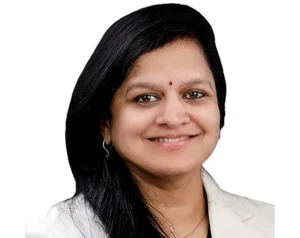
Satyavathi Divadari
Founder and CEO · CyBe Global · Founder, CSA Bangalore Chapter
Satyavathi Divadari
Founder and CEO · CyBe Global · Founder, CSA Bangalore Chapter
28 years on the hiring side of enterprise security, CISSP, US patent holder
Satyavathi Divadari spent twenty-eight years as the buyer before becoming the builder. Across SOC-facing security roles at Wells Fargo, Cognizant, Capgemini and IBM, holding a CISSP and a US patent, she spent those years deciding what a job-ready SOC analyst actually needed to know — and how much of the standard training pipeline was noise.
She also founded the CSA Bangalore Chapter and built it into a community that has won the Cloud Security Alliance’s global Chapter of Excellence award three years running — the same practitioner network that reviews AISA’s curriculum today.
Why this facilitator, for this course
AISA is built to produce a portfolio a hiring manager can open and read, not a quiz score. Satyavathi has been that hiring manager — assessing SOC analyst candidates and deciding who was ready for the floor across four global employers — so the incident reports and investigations this course grades against are graded against what actually got someone hired, not an abstract rubric.
Course Advisors
Practising security leaders who review this curriculum and keep it current.
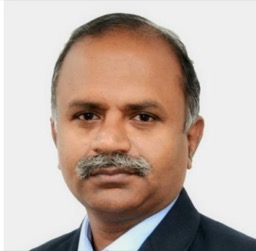
R S Lakshminarayanan
GM & Regional CISO · Wipro Limited

Ravi Subbiah
Managing Partner · TCS Ltd

Vishal Saraswat
Head, Research & Innovation, Cybersecurity · Bosch Software
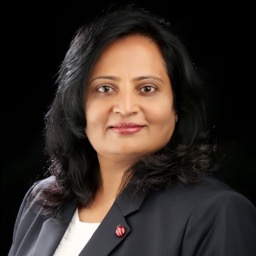
Sai Lakshmi Sathyanarayana
Partner, Cyber Leader · EY GDS
What Learners Say
“This was different learning experience all together. So much fun and so much to learn. The energy was continuously high to know what’s next. Not just regular content but every time something new and different. I recommend this learning methodology to every learner.”
Pravinkumar Jha
Head of Product and Cloud Security
“That sounds like such a refreshing change from usual conferences. Learning through music and teamwork really makes complex concepts stick in a fun way.”
Rohan Pinto
CTO and Founder, 1Kosmos